Introduction to Zhejiang Institute of Economics and Trade
Zhejiang Institute of Economics and Trade (ZJIET) was founded in 1979, and is now located in Hangzhou, Zhejiang Province, China. ZJIET is a full-time public higher vocational college, awarded with honors such as National High-Quality Higher Vocational College, Second Phase Construction Unit of High-Level Vocational Colleges and Majors with Chinese Characteristics, and Zhejiang “Double High” Vocational College. It offers 11 secondary schools, 1 Sino-Finland Cooperatively-run School, 33 vocational majors and sub-majors of higher education. These schools have formed a professional cluster architecture layout that is led by the Digital Commerce major cluster, driven by the major clusters in Digital and Intelligent Finance and Economics and Creative Design, and supported by the major clusters in Food and Health, Precision and Intelligent Manufacturing, and Modern Agriculture, thereby aligning with the "integrated development of the primary, secondary, and tertiary industries." Currently, there are over 12,000 full-time students (including international students) and more than 600 faculty and staff members.
ZJIET has always adhered to the principle of open education and the internationalized educational philosophy of multi-dimensional development, with a network of 40 colleges and enterprises across more than 30 countries and regions. Currently, it boasts 4 provincial-level "Belt and Road" Silk Road Colleges, 1 Sino-foreign Cooperative Education Institution, 1 "Belt and Road" E-commerce Valley (Bangkok) Cooperation Center, Overseas Practice Bases, and "Chinese and Skills" Initiative Center. It is recognized as the Top 50 National Higher Vocational Colleges in terms of international influence, the Top 50 Asia-Pacific Vocational Colleges in terms of influence, and a typical vocational college for international cooperation.
Introduction to ZJIET 2026 International Summer Program
In 2026, ZJIET forms high-level international teaching and management teams excelling in both "specialized fields and language proficiency." Through collaboration with enterprises, it will develop training resources to launch an international summer program on "Chinese Language + Skills + Culture," covering 9 themes such as e-commerce, artificial intelligence, industrial robotics, agricultural products and food testing, big data technology, big data finance, exhibition planning, business management, and Management of International Cooperatives.
I. Program Features
1. Enhance Students’ Sustainable Development Capabilities
Building on the high-quality educational resources and industry resources of ZJIET, the program provides advanced teaching facilities such as AI laboratories. This offers a cross-disciplinary learning platform for students. The program will cover multiple fields, including digital trade, industry, financing, modern agriculture, and artificial intelligence, significantly enhancing participants’ professional practical skills and global competitiveness, thereby laying a solid foundation for their sustainable career development.
2. Foster Collaborative Development Among Schools and Enterprises
By collaborating with ZJIET’s high-quality partner enterprises, the program will provide various types of corporate practice opportunities. It pioneers a tripartite collaboration model involving ZJIET, enterprises, and foreign colleges. Students will jointly participate in real-world corporate projects, achieving a complete cycle of “knowledge -- skill -- industry”, thereby creating a win-win situation for all three parties. Through visits in Chinese companies, students are able to understand emerging global professions and increase professional skills.
3. Increase Cross-cultural Communication Abilities
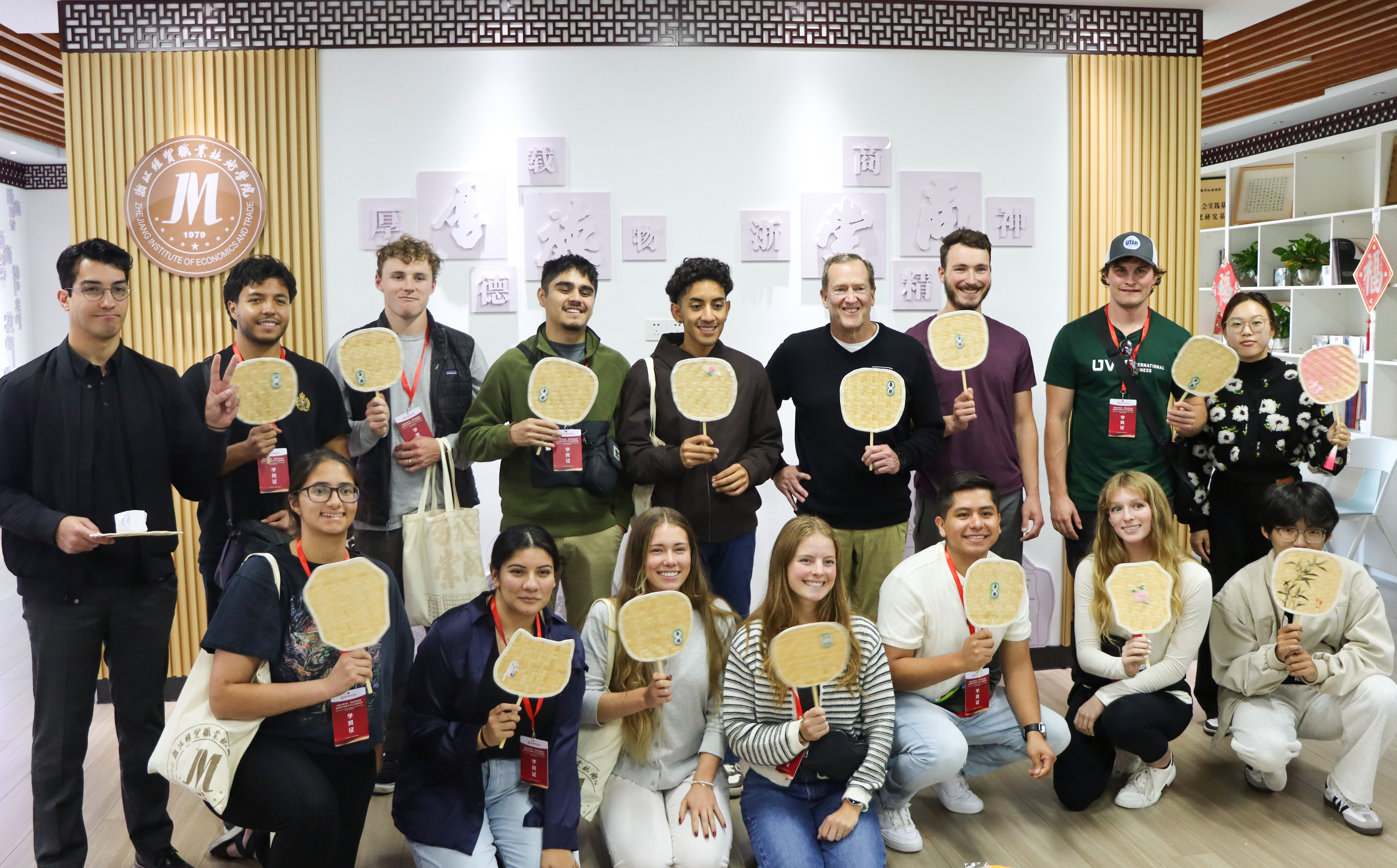
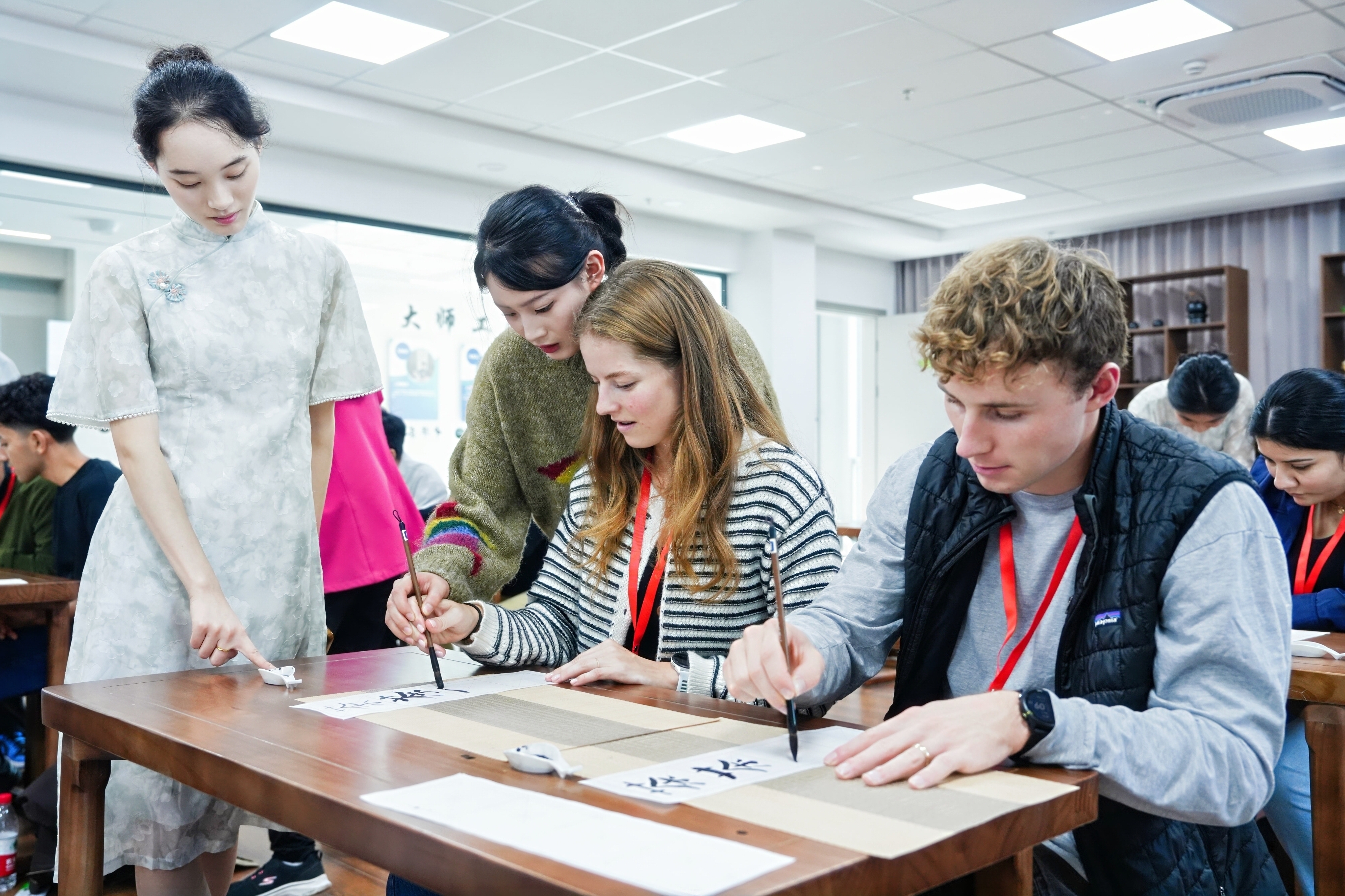
Located in Hangzhou, the ancient capital of the Southern Song Dynasty, the program will arrange lectures on Song Dynasty culture, hands-on intangible cultural heritage (ICH) craft experiences, and explorations of historical sites. Students will have the opportunity to learn traditional Chinese handicrafts, tea art, and Chinese Kungfu. They will also explore historical landmarks such as the Southern Song Imperial Street and Southern Song Dynasty Ruins Museum, and visit West Lake—a UNESCO World Heritage site. Through these experiences, students will witness the continuity and depth of China's 5,000-year history and cultural legacy.
II. Program Structure
The program is primarily structured around the following three thematic modules. Each module includes corresponding courses and activities, offering students a comprehensive and immersive learning experience.
Module | Contents | Days | Professional Fields |
1. Professional Skills Courses | 3-6 core courses in specialized fields | 2-4 | 1. E-commerce 2. Artificial Intelligence 3. Industrial Robotics 4. Agricultural Products and Food Testing 5. Big Data Technology 6. Big Data Finance 7. Exhibition Planning 8. Business Management 9. Management of International Cooperatives |
2. Enterprise Practice Courses | Visits to Hangzhou's "Six Little Dragons" enterprises, national-level specialized and sophisticated "Little Giant" enterprises, and leading companies in various sectors. | 2-3 | |
3. Chinese Culture Courses | Song Dynasty Culture Lectures, hands-on intangible cultural heritage craft experiences, visits to historical and cultural heritage sites. | 2-3 |
III. Contact Information
International students can choose from the above 9 professional fields, and can also come up with other fields. ZJIET will customize the overall plan for the International Summer Program based on the professional fields and specific needs of visiting delegations. Please find the contact details below.
Contact Person: Chu Xiaohui, School of International Education
Email: 20056159@qq.com